
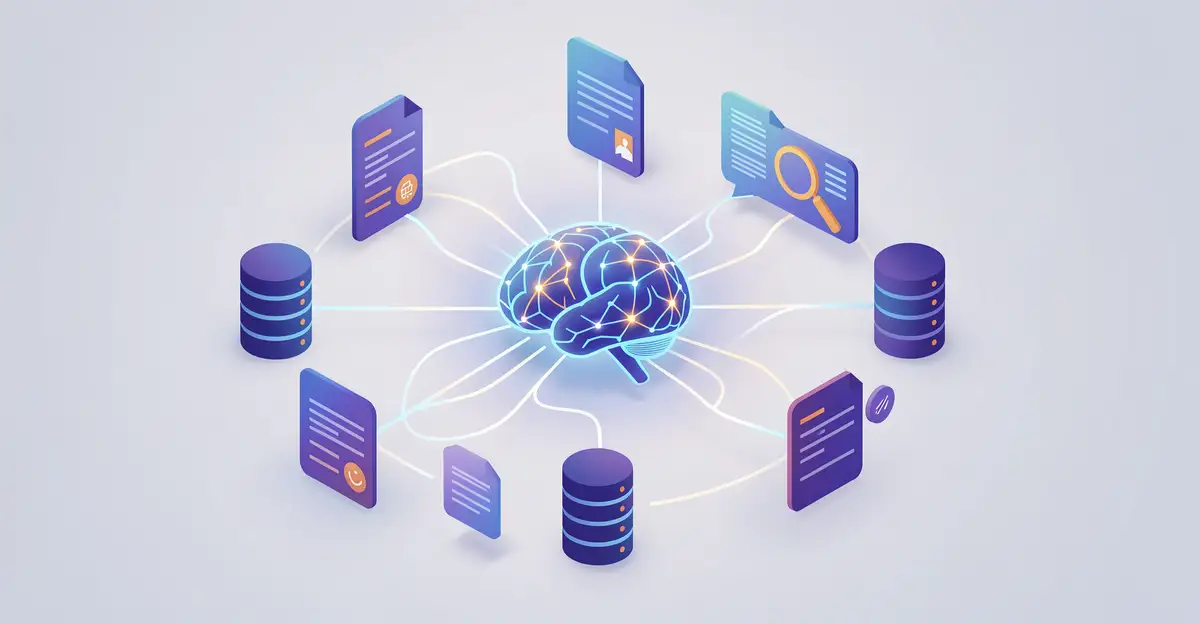
If you’ve ever asked an AI chatbot a question and received a confident but completely wrong answer, you’ve encountered the limits of standard language models. Retrieval-augmented generation (RAG) solves this problem by connecting AI to real, up-to-date information sources instead of relying solely on what it memorized during training.
In this article, we’ll explain what retrieval-augmented generation is, walk through how it works step by step, and show why it has become the go-to approach for building accurate, trustworthy AI applications.
Introduction
Retrieval-Augmented Generation, often shortened to RAG, is one of the most important ideas in modern artificial intelligence. If you have used a chatbot that answers questions about your own documents, a search assistant that cites its sources, or a customer support tool that pulls from a company knowledge base, you have likely encountered RAG in action. This article explores What Is Retrieval-Augmented Generation and How Does It Work with clear, practical guidance.
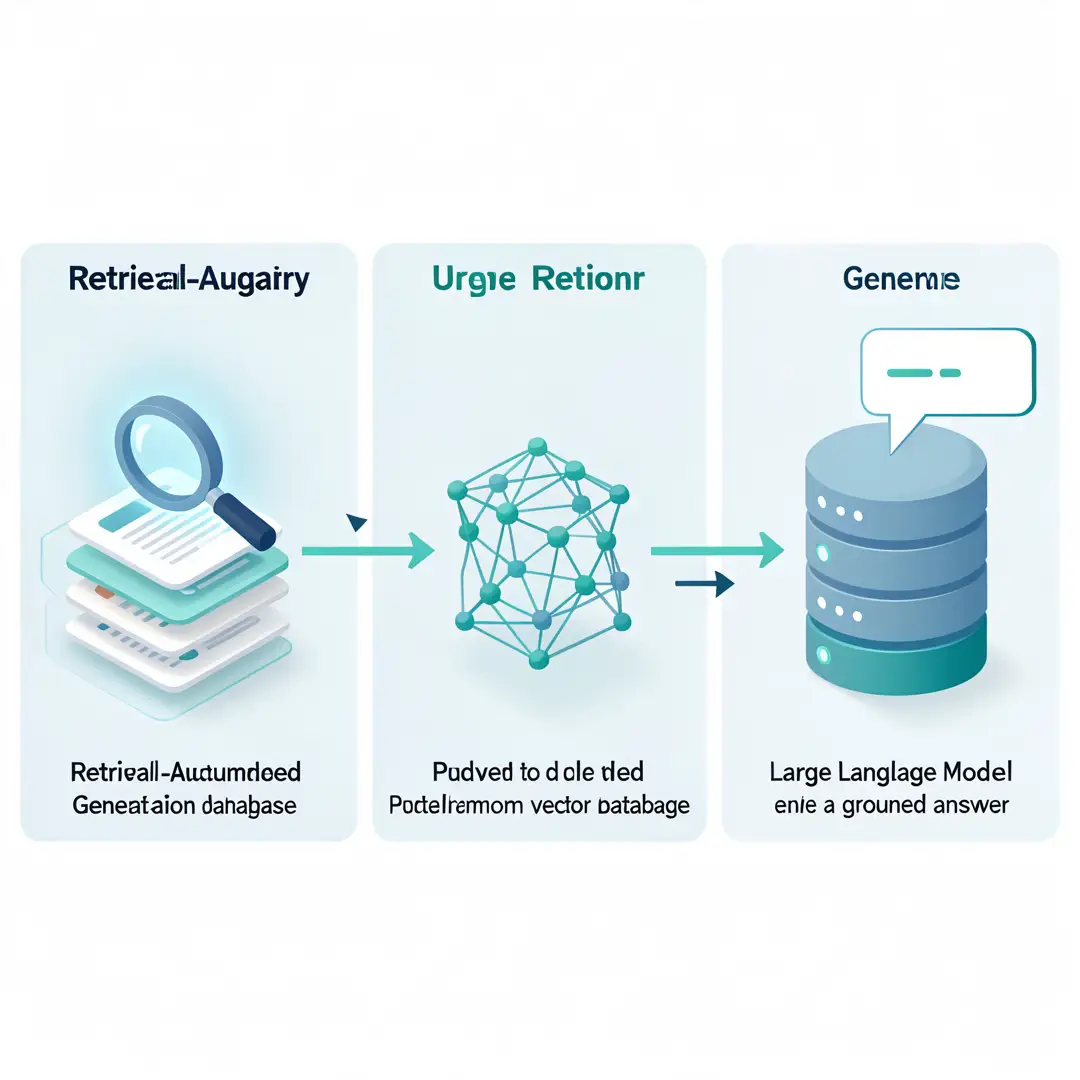
At its core, RAG is a technique that combines two capabilities: retrieving relevant information from a data source and generating a natural language response based on that information. Instead of relying solely on what a language model learned during training, RAG lets the model look things up first, then answer. That simple shift has profound consequences for accuracy, freshness, and trustworthiness.
Understanding the fundamentals of What Is Retrieval-Augmented Generation and How Does It Work helps you make informed decisions. Whether you are a developer building an AI product, a business leader evaluating tools, or a curious learner, knowing how RAG works allows you to judge claims, avoid common pitfalls, and get better results from AI systems.
Key Concepts
Before diving into the mechanics, it helps to understand the vocabulary. RAG sits at the intersection of information retrieval and language generation, so the key concepts come from both worlds.
Large Language Models
A large language model (LLM) is a neural network trained on massive amounts of text to predict and generate language. LLMs are powerful, but they have two well-known weaknesses: they can hallucinate, meaning they invent plausible-sounding but false information, and their knowledge is frozen at the time of training unless they are updated. RAG addresses both problems.
Retrieval
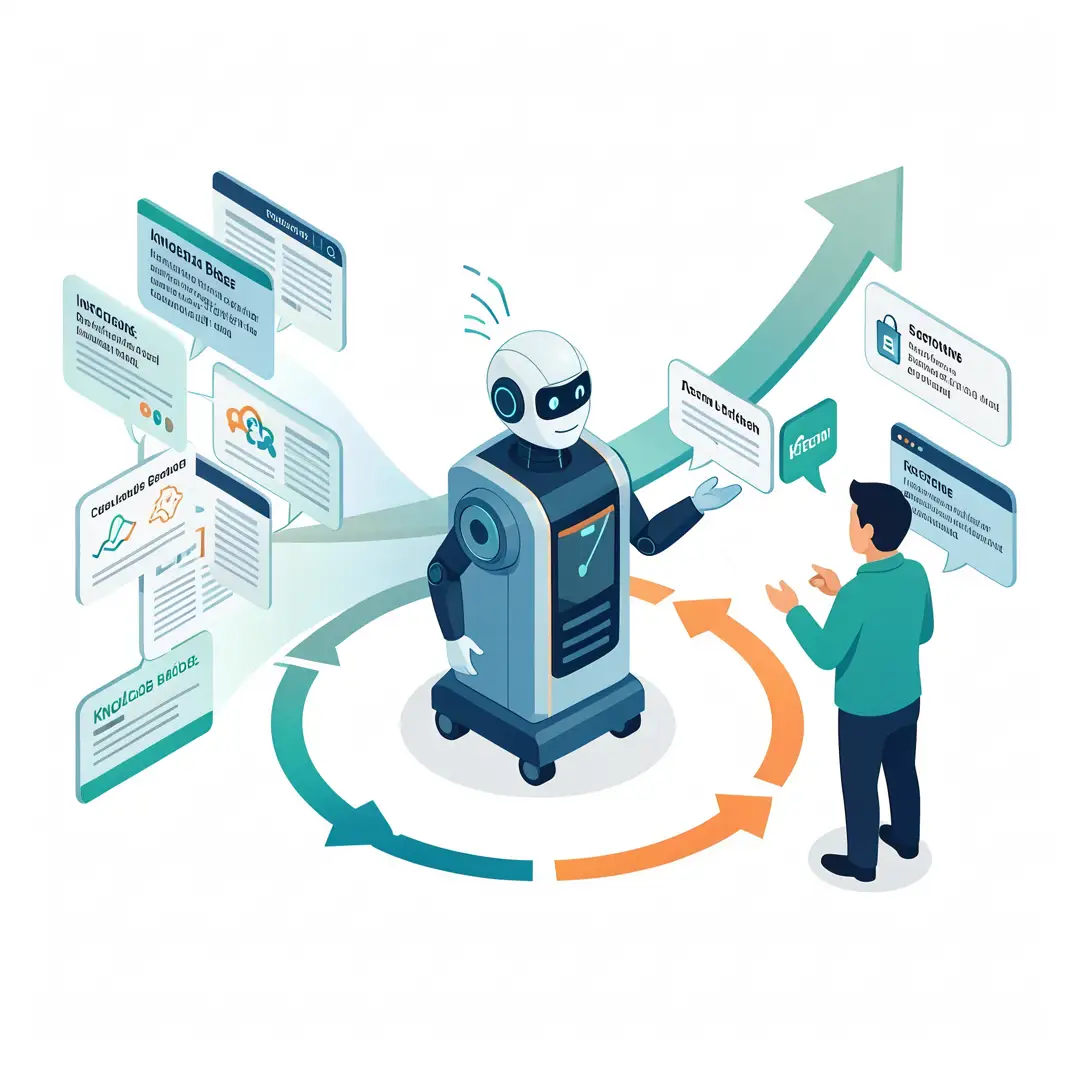
Retrieval is the process of finding the most relevant pieces of information from a collection of documents, databases, or web pages. Traditional retrieval uses keyword matching, while modern systems often use semantic search, which compares meaning rather than exact words.
Embeddings and Vector Search
An embedding is a numerical representation of text that captures its meaning. Documents are split into chunks, converted into embeddings, and stored in a vector database. When a user asks a question, the question is also converted into an embedding, and the system finds the chunks whose embeddings are closest in meaning. This is the heart of how RAG finds relevant context.
Augmentation
Augmentation means adding the retrieved information to the prompt that is sent to the language model. The model then generates an answer using both the question and the retrieved context, which grounds the response in real data.
Generation
Generation is the final step, where the LLM produces a fluent, human-readable answer. Because the answer is conditioned on retrieved evidence, it is more likely to be accurate and can include citations.
- Grounding: Tying model output to specific, verifiable sources.
- Chunking: Splitting documents into smaller passages for efficient retrieval.
- Top-k: The number of retrieved chunks passed to the model.
- Hallucination: Fabricated information generated without evidence.
Deep Dive
Now that the vocabulary is clear, let us walk through how RAG actually works end to end. The process typically has two phases: an offline indexing phase and an online query phase.
The Indexing Phase
Before any question is asked, the system prepares its knowledge base. Documents are collected from sources such as PDFs, websites, databases, or internal wikis. These documents are cleaned, split into chunks of a few hundred words, and converted into embeddings using an embedding model. The embeddings, along with the original text and metadata, are stored in a vector database. This step can be repeated whenever the underlying data changes, which keeps knowledge fresh.
The Query Phase
When a user submits a question, the system embeds the question using the same embedding model. It then searches the vector database for the most similar chunks. Often a reranking step follows, where a more precise model scores the candidates and keeps only the best ones. The selected chunks are inserted into a prompt template alongside the user question. Finally, the language model generates an answer based on that prompt. Some systems also ask the model to cite which chunk supported each claim, improving transparency.
Why RAG Matters
RAG offers several advantages over fine-tuning or relying on a model’s built-in knowledge. It is cheaper to update because you only change the document store, not the model weights. It is more transparent because answers can be traced to sources. It reduces hallucinations because the model has evidence in front of it. And it works with private data that the model was never trained on.
Common Architectures
There are several RAG variants. Naive RAG retrieves once and generates once. Advanced RAG adds query rewriting, reranking, and hybrid search that combines keyword and semantic methods. Modular RAG allows different components, such as retrievers and generators, to be swapped or combined. Agentic RAG lets an AI agent decide when and what to retrieve, sometimes performing multiple retrieval steps before answering.
- Naive RAG: Simple retrieve-then-generate pipeline.
- Advanced RAG: Adds preprocessing, reranking, and hybrid search.
- Modular RAG: Composes interchangeable retrieval and generation modules.
- Agentic RAG: Uses reasoning to plan multiple retrieval actions.
Best Practices
Getting RAG right requires attention to detail. Reliable information and consistent habits lead to better long-term outcomes. The following practices help you build systems that are accurate, maintainable, and trustworthy.
Chunk Thoughtfully
Chunk size affects retrieval quality. Chunks that are too small lose context; chunks that are too large dilute relevance. Experiment with sizes between 200 and 800 tokens and consider overlapping chunks to preserve continuity across boundaries.
Choose the Right Embedding Model
Not all embedding models are equal. Evaluate candidates on your own data using retrieval metrics such as recall and mean reciprocal rank. Domain-specific models often outperform general-purpose ones on specialized content.
Combine Search Methods
Hybrid search that blends keyword matching with vector similarity usually beats either method alone. Keyword search handles exact terms like product codes or names, while semantic search handles paraphrases and intent.
Rerank Results
A cross-encoder reranker can dramatically improve which chunks make it into the final prompt. Retrieve a larger candidate set, then rerank down to the top few chunks.
Ground and Cite
Instruct the model to answer only from the retrieved context and to say when it does not know. Requiring citations makes errors visible and builds user trust.
Monitor and Evaluate
Track retrieval accuracy, answer faithfulness, and latency. Build a test set of question-answer pairs and run it regularly. Continuous evaluation catches regressions before users do.
- Keep the knowledge base current with scheduled reindexing.
- Log queries and retrieved chunks for debugging.
- Set a fallback response when confidence is low.
- Watch for prompt injection risks in retrieved content.
Step-by-Step Guide
If you want to apply RAG in practice, follow these steps. They work for personal projects, team prototypes, and production systems alike.
Step 1: Understand the fundamentals
Start by grasping what retrieval, embeddings, and generation each contribute. Read documentation, try a small demo, and trace how a query becomes an answer. Without this foundation, later decisions about chunking, models, and evaluation will feel arbitrary.

Step 2: Assess your starting point
Look at what you already have. Do you have documents, a database, or an API? What tools and skills are available? Identify gaps such as missing data pipelines or lack of vector storage. Honest assessment prevents wasted effort.
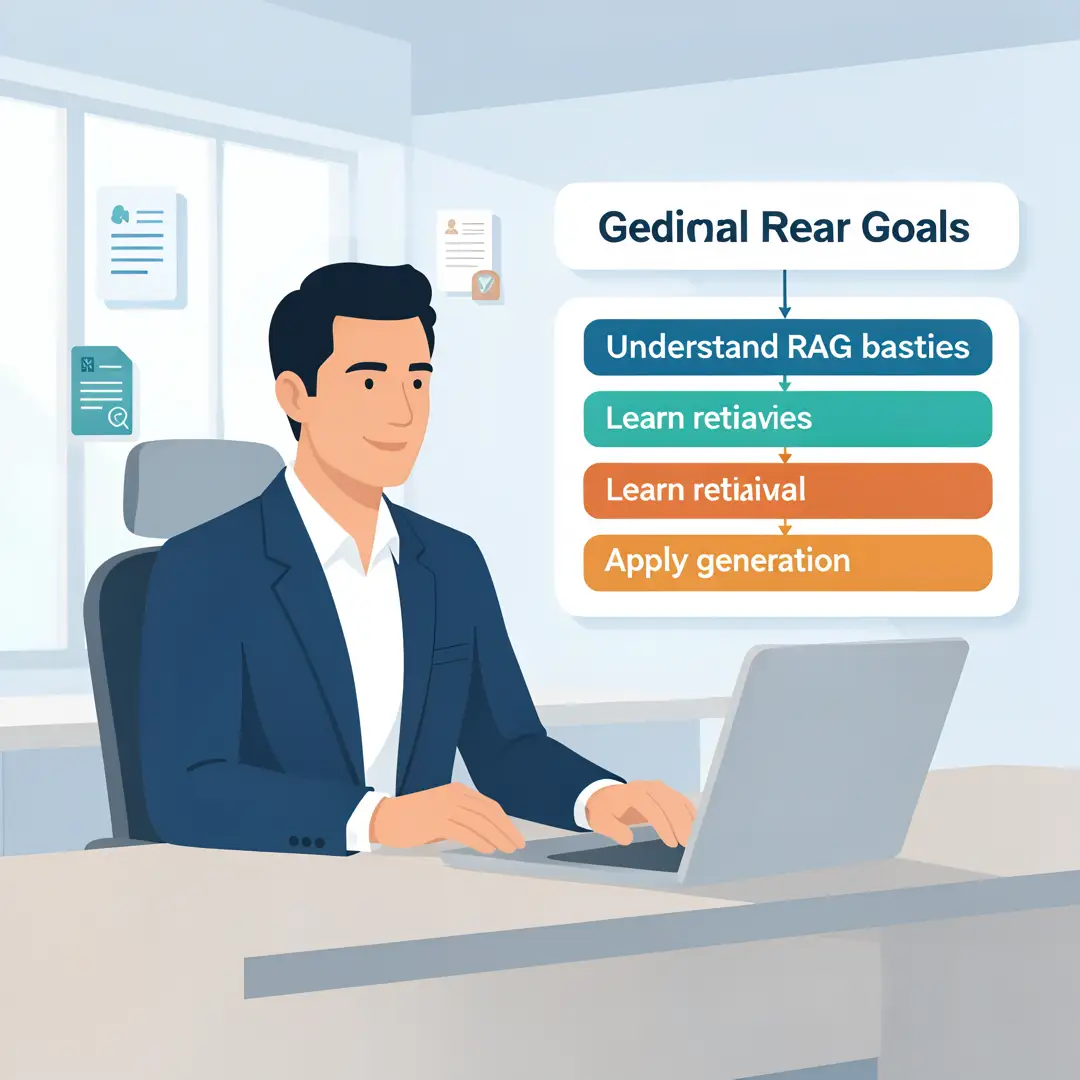
Step 3: Set clear goals
Define what success looks like. Is it answer accuracy, response speed, cost per query, or user satisfaction? Write measurable targets. Clear goals guide every technical choice that follows.

Step 4: Gather necessary resources
Collect your documents, choose an embedding model, set up a vector database, and select an LLM. Decide on hosting, budget, and any compliance requirements. Having resources ready avoids mid-project stalls.
Step 5: Apply the core methods
Build the indexing pipeline, implement retrieval, add reranking if needed, and wire up generation. Test with real questions and iterate. Start simple, then add complexity only when it improves results.
Step 6: Monitor your progress
Track metrics over time. Review logs, gather user feedback, and rerun your evaluation set. Update the knowledge base as content changes. Monitoring turns a one-time build into a reliable, improving system.
FAQ
What should I know about What Is Retrieval-Augmented Generation and How Does It Work?
You should know that RAG combines retrieval of relevant information with language generation to produce grounded, source-backed answers. It reduces hallucinations, allows updates without retraining, and works with private data. The main trade-offs are added architectural complexity and the need for ongoing evaluation and maintenance.
Who is this guide for?
This guide is for anyone seeking clear, actionable information about RAG. That includes developers and data scientists building AI applications, product managers evaluating AI features, business leaders assessing tools, and curious learners who want to understand how modern AI assistants produce reliable answers.
Do I need machine learning expertise to use RAG?
No. Many managed services handle embeddings, vector storage, and generation through simple APIs. A basic understanding of the concepts in this article is enough to get started, though deeper expertise helps with optimization.
Is RAG better than fine-tuning?
They solve different problems. RAG is best for knowledge that changes often or must be cited. Fine-tuning is better for teaching style, format, or specialized behavior. Many systems use both together.
How do I keep a RAG system accurate over time?
Reindex your documents regularly, monitor retrieval and answer quality, collect user feedback, and rerun evaluation tests. Treat the knowledge base as a living asset rather than a one-time setup.
Conclusion
Retrieval-Augmented Generation is a practical, powerful approach to making AI systems more accurate and trustworthy. By retrieving relevant evidence before generating an answer, RAG grounds responses in real information, reduces hallucinations, and keeps knowledge current without retraining models. This article explored What Is Retrieval-Augmented Generation and How Does It Work with clear, practical guidance.
Understanding the fundamentals of What Is Retrieval-Augmented Generation and How Does It Work helps you make informed decisions. From chunking and embeddings to reranking and evaluation, each component plays a role in the final answer quality. Reliable information and consistent habits lead to better long-term outcomes, so start simple, measure carefully,.
You now have a solid foundation for What Is Retrieval-Augmented Generation and How Does It Work. Apply the best practices above and revisit this guide as your needs evolve.