
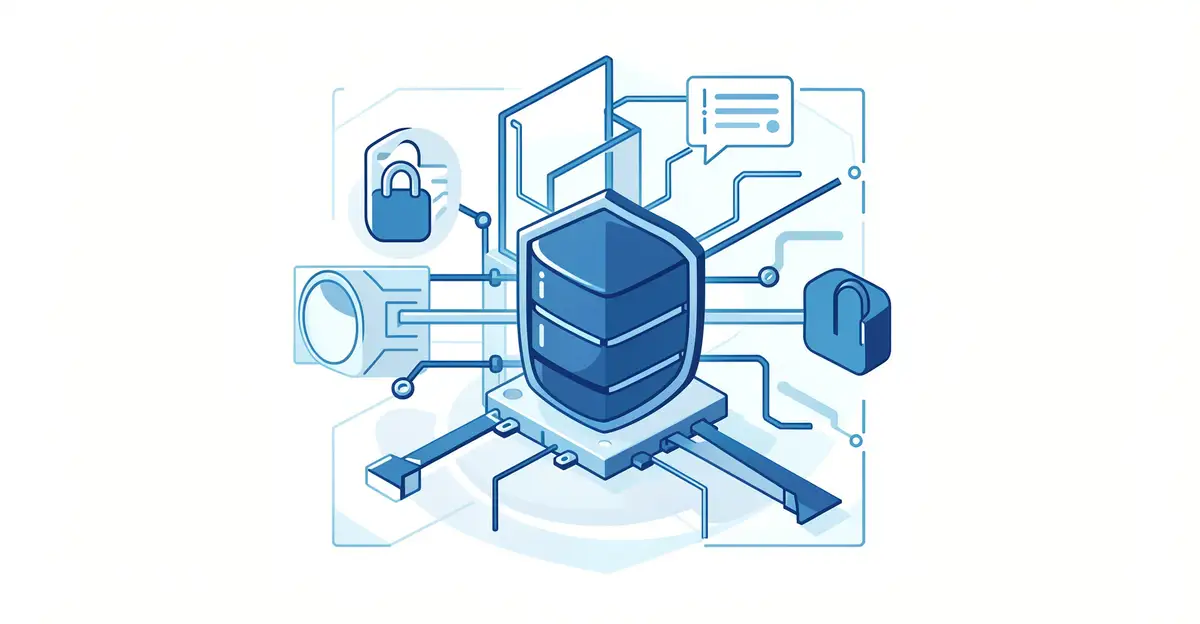
Every day, you trust cloud services with sensitive data—but can you be sure it stays private while it’s being processed? That’s the problem confidential computing solves. Instead of protecting data only at rest or in transit, it shields information while it’s actively in use.
In this article, we’ll explain what confidential computing is and how it works, breaking down the hardware and encryption techniques behind it. You’ll learn where it delivers real value and how to decide if it’s right for your organization.
Introduction
Confidential computing is an approach to data security that protects information while it is being processed, not just while it is stored or moving across a network. For most of computing history, data has been vulnerable the moment it enters a processor: encryption could shield it at rest on a disk and in transit over the wire, but once the application needed to read or compute on that data, it had to be decrypted into plaintext memory. That moment of exposure is where confidential computing steps in.
If you work with sensitive data — personal records, financial details, health information, or proprietary models — understanding confidential computing helps you make informed decisions about where and how to run workloads. This article explores what confidential computing is and how it works with clear, practical guidance you can act on. You will learn the core concepts, a step-by-step way to adopt the technology, best practices, and answers to common questions.
The central promise is straightforward: keep data encrypted even during computation, using hardware-based trusted execution environments. Instead of trusting every layer of the software stack, you reduce the trust boundary to a small, verifiable piece of hardware. That shift has real consequences for cloud adoption, regulatory compliance, and multi-party collaboration.
Understanding the fundamentals of confidential computing helps you make informed decisions, because the technology touches architecture, vendor choice, and operational habits. Reliable information and consistent habits lead to better long-term outcomes, whether you are a developer, a security lead, or a decision-maker evaluating risk. Let’s break it down.
Key Concepts
Before diving into mechanics, it helps to pin down the vocabulary. Confidential computing rests on a few building blocks that appear in nearly every implementation.

Trusted Execution Environment (TEE)
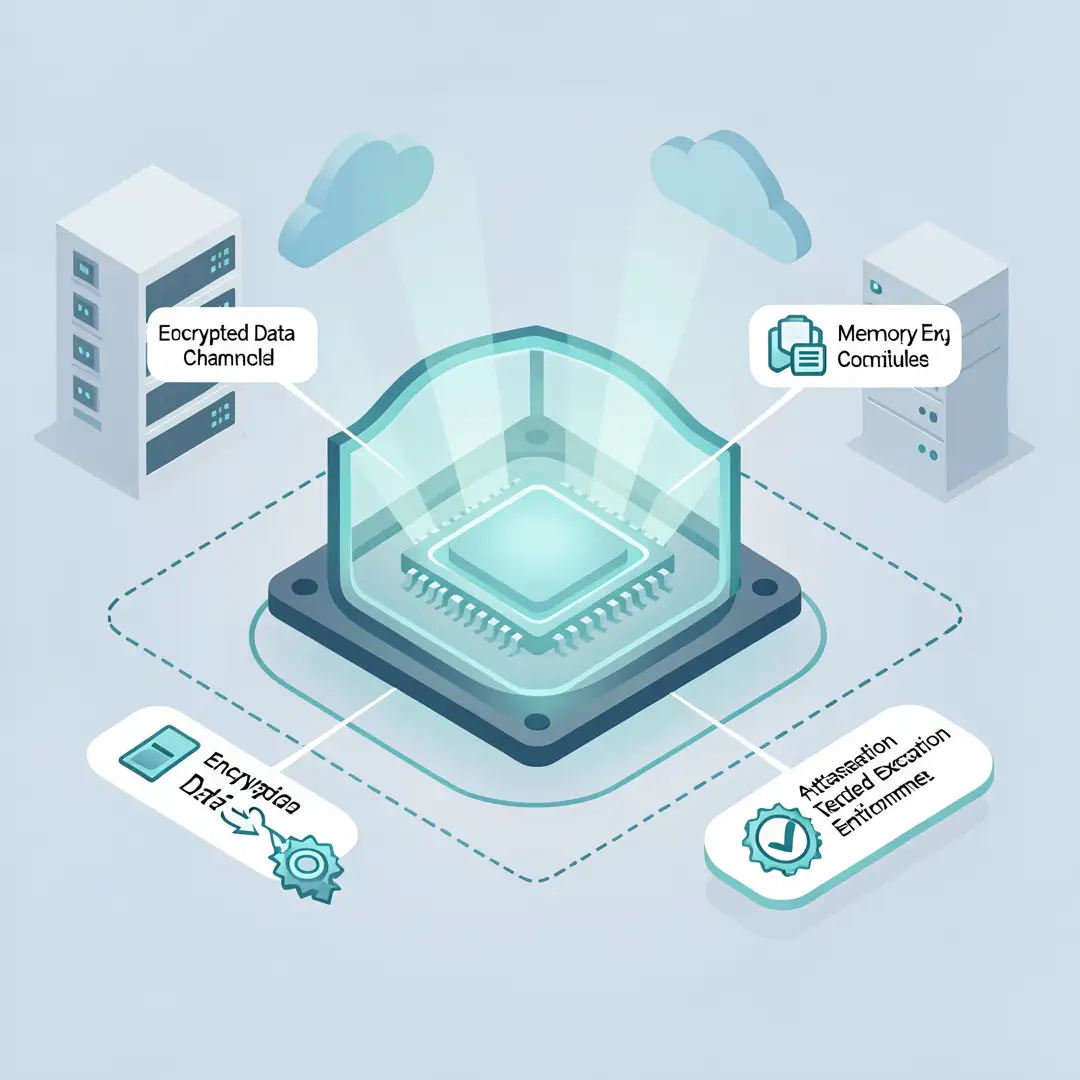
A TEE is a secure area inside a processor that isolates code and data from the rest of the system, including the operating system and hypervisor. Hardware from Intel, AMD, Arm, and others provides TEEs under different brand names. The TEE guarantees that code loaded into it cannot be inspected or tampered with by higher-privilege software.

Enclaves and Secure Partitions
An enclave is a protected region of memory and execution created within a TEE. When an application runs inside an enclave, its memory is encrypted and access-controlled by the CPU. Different vendors use terms like secure enclaves, confidential virtual machines (VMs), or confidential containers; the principle is the same — isolation at the hardware level.
Attestation
Attestation is the process of proving that a TEE is genuine and running the expected code. A remote party can request a signed report from the hardware, verify it against the vendor’s roots of trust, and then decide whether to release secrets such as encryption keys. Without attestation, you would have no way to confirm that the secure environment is trustworthy.
Sealing and Binding
Sealing encrypts data so that only a specific enclave on a specific machine can decrypt it, useful for persisting secrets between sessions. Binding ties data to a platform or identity. Both are cryptographic techniques that extend the TEE’s protection beyond a single run.
The Trust Boundary
In traditional security, you often trust the operating system, the hypervisor, and the cloud provider’s staff and processes. Confidential computing shrinks that trust boundary to the CPU and its firmware. Everything outside the TEE is assumed potentially hostile. This model is sometimes called “trusted hardware, untrusted software.”
Deep Dive
How does confidential computing actually work in practice? The flow typically follows a predictable sequence, from workload creation to secure execution to verification.
Creating the Secure Environment
When an application starts, the platform allocates encrypted memory pages and asks the CPU to establish a TEE. The CPU marks those pages as protected, and only code running inside the TEE can read or write them. Even the hypervisor cannot access the plaintext contents. The memory encryption keys are managed by the CPU and are never exposed to software.
Loading and Verifying Code
The application and its dependencies are loaded into the enclave or confidential VM. At this point, a measurement — essentially a cryptographic hash — is computed over the initial state of the code and data. Any change to the code changes the measurement, which is how attestation detects tampering.
Remote Attestation in Action
Suppose a client wants to send sensitive data to a cloud service. The client asks the service for an attestation report. The hardware produces a signed statement containing the measurement of the running code, the TEE’s identity, and other metadata. The client’s software verifies the signature against the chip vendor’s public key and checks that the measurement matches an approved version of the service. Only then does the client release a decryption key or the data itself.
Execution and Data Flow
Inside the TEE, data is decrypted and processed. Because memory is encrypted by the CPU, an attacker who physically reads memory chips or compromises the hypervisor sees only ciphertext. Input and output channels use encrypted communication, and results are encrypted again before leaving the secure boundary. The plaintext exists only within the protected execution context.
What Confidential Computing Does Not Solve
It is not a silver bullet. It does not protect against bugs inside your own application, side-channel attacks that exploit timing or power consumption, or a compromised CPU vendor. It also adds performance overhead because of memory encryption and context switching. Good design accounts for these limits rather than assuming absolute security.
Understanding these mechanics matters because they determine which workloads benefit most: multi-party data collaboration, regulated data processing, and protecting models or code in untrusted infrastructure. Reliable information and consistent habits lead to better long-term outcomes, so validate claims with attestation evidence rather than marketing promises.
Best Practices
Adopting confidential computing successfully depends less on the hardware and more on disciplined practice. Consider these guidelines.
- Start with a clear threat model. Identify what you are protecting against — a curious cloud operator, a compromised hypervisor, or a malicious tenant. Confidential computing addresses some threats but not all.
- Always verify attestation. Never accept an enclave at face value. Implement remote attestation checks and pin approved measurements. Treat an unverified TEE as untrusted.
- Minimize the trusted code base. Keep the code inside the TEE small and auditable. The more code you trust, the larger your attack surface.
- Protect keys rigorously. Use hardware-backed key management and release secrets only after successful attestation. Rotate keys and avoid hardcoding them.
- Measure performance impact. Benchmark your workload inside a TEE before committing. Memory encryption and context switches add latency, and some workloads see double-digit slowdowns.
- Keep firmware and microcode updated. TEE security depends on CPU firmware; unpatched systems can be vulnerable to known attacks.
- Document and test your attestation flow. Regular drills and automated checks catch misconfigurations before they become breaches.
These habits turn confidential computing from a checkbox into a durable control. Consistency matters more than any single feature.
Step-by-Step Guide
If you are ready to move from theory to practice, follow this sequence. Each step builds on the last, and skipping ahead usually leads to rework.

Step 1: Understand the fundamentals
Before selecting a vendor or writing code, make sure your team grasps TEEs, enclaves, attestation, and the trust boundary. Read vendor documentation, review threat models, and identify where plaintext currently exists in your architecture. This groundwork prevents costly misunderstandings later.

Step 2: Assess your starting point
Audit your current workloads. Which ones handle sensitive data during processing? Which face regulatory requirements such as GDPR, HIPAA, or financial rules? Check what hardware and cloud services you already use — many providers now offer confidential VMs or containers. Map your existing encryption at rest and in transit, then pinpoint the gaps during computation.

Step 3: Set clear goals
Define what success looks like. Are you trying to enable secure multi-party analytics, meet a compliance obligation, or protect intellectual property in a shared cloud? Set measurable targets such as “process customer records in a confidential VM with verified attestation by Q4.” Clear goals guide architecture and budget decisions.

Step 4: Gather necessary resources
You will need compatible hardware, supporting software frameworks, and skilled people. Identify toolchains from your cloud provider or hardware vendor, key management services, and attestation verification libraries. Allocate training time for developers and security engineers, and budget for potential performance overhead and monitoring tools.
Step 5: Apply the core methods
Begin with a pilot workload rather than your most critical system. Containerize or package the application for a TEE, implement remote attestation, and route secrets through a hardware-backed key release process. Encrypt all input and output channels. Test thoroughly, including failure modes such as attestation rejection and key rotation.

Step 6: Monitor your progress
After deployment, track performance metrics, attestation success rates, and security events. Review logs for anomalies and update measurements whenever code changes. Run periodic audits against your original goals, and refine the threat model as new attacks emerge. Continuous monitoring turns a one-time project into an ongoing capability.
FAQ
What should I know about What Is Confidential Computing and How Does It Work?
The most important thing to understand is that confidential computing protects data while it is being used, closing the gap left by encryption at rest and in transit. It relies on hardware-based trusted execution environments, remote attestation to prove trustworthiness, and encrypted memory managed by the CPU. You should also know its limits: it does not fix application bugs, side-channel attacks, or a compromised hardware vendor, and it can add performance overhead. Approach it as one layer in a defense-in-depth strategy, verify attestation evidence rather than trusting claims, and start with a pilot before rolling it out broadly.
Who is this guide for?
This guide is for anyone who needs a clear, practical overview of confidential computing. That includes software developers building sensitive applications, security and compliance professionals evaluating controls, cloud architects designing multi-tenant systems, and business decision-makers assessing risk and regulatory requirements. No deep cryptography background is required, though familiarity with basic cloud and encryption concepts will help. If you handle personal, financial, or health data — or collaborate with partners on shared datasets — you will find the steps and best practices directly.
You now have a solid foundation for What Is Confidential Computing and How Does It Work. Apply the best practices above and revisit this guide as your needs evolve.