
Have you ever typed a message in one language and watched it appear instantly in another? That’s the power of real-time language translation—a technology that’s quietly reshaping how we communicate across borders. Behind every instant translation lies a remarkable blend of artificial intelligence and vast linguistic data.
In this article, we’ll break down how real-time language translation actually works, from neural networks to speech recognition. Whether you’re a curious reader or a tech enthusiast, you’ll walk away with a clear understanding of the tools making global conversations possible.
Introduction
Real-time language translation has moved from science fiction to everyday utility. It powers live captioning in video calls, instant messaging apps that bridge language gaps, and handheld devices that interpret speech on the fly. This article explores the technology behind real-time language translation with clear, practical guidance, so you can understand how these systems work and where they are heading.
At its core, real-time translation combines several mature technologies: speech recognition, machine translation, and speech synthesis. Each component has improved dramatically over the past decade, thanks to deep learning and massive parallel computing. The result is a pipeline that can listen to spoken words in one language and almost immediately produce spoken or written words in another.
Understanding the fundamentals of the technology behind real-time language translation helps you make informed decisions—whether you are evaluating a translation app for business, building a multilingual product, or simply curious about how your phone understands a foreign menu. Reliable information and consistent habits lead to better long-term outcomes, especially when you rely on these tools for critical communication.
Key Concepts
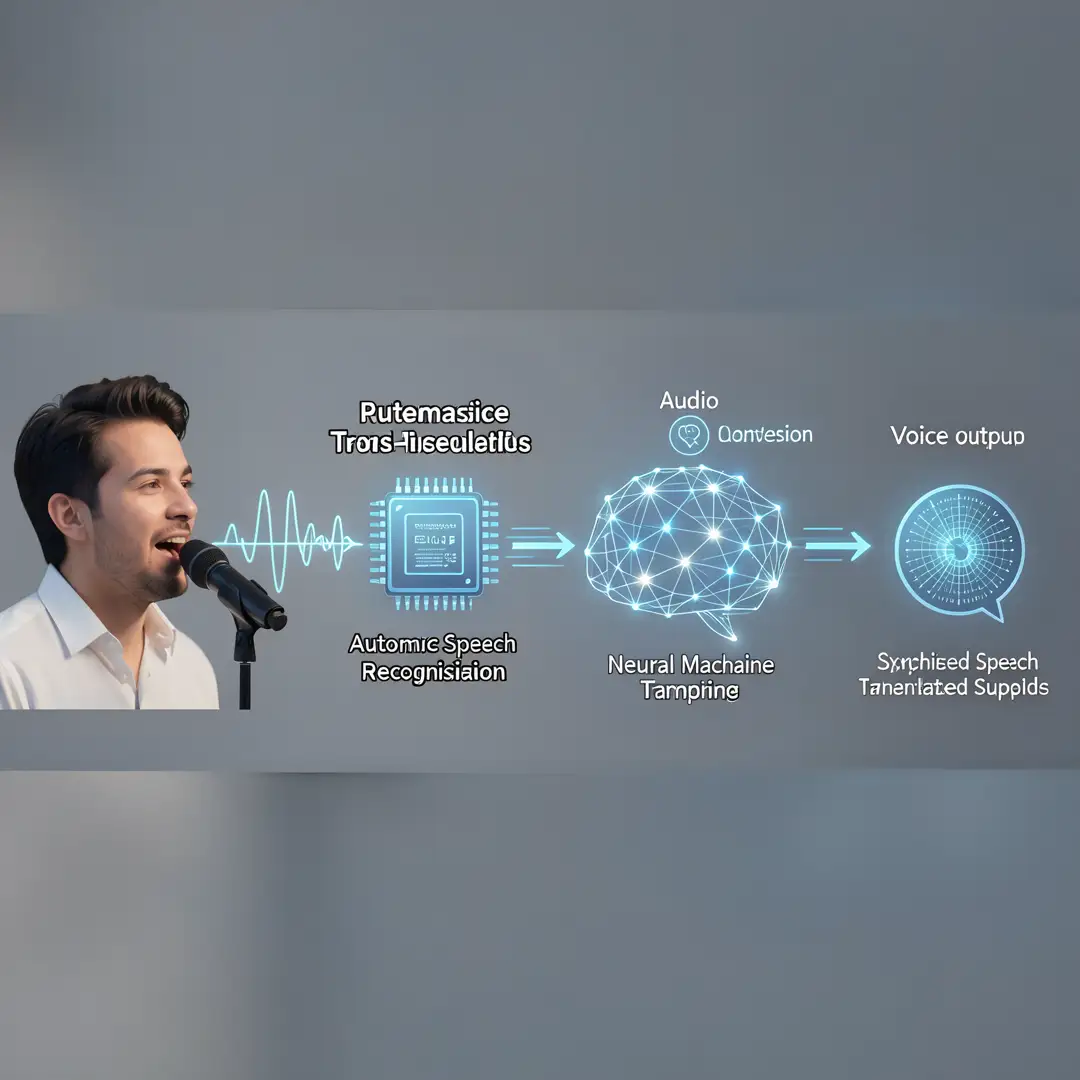
To grasp how real-time translation works, start with the three main stages: automatic speech recognition (ASR), machine translation (MT), and text-to-speech (TTS). Each stage has its own challenges and trade-offs.
- Automatic Speech Recognition (ASR): Converts audio waves into text. Modern ASR uses neural networks trained on thousands of hours of speech. It must handle accents, background noise, and ambiguous sounds.
- Machine Translation (MT): Takes the recognized text and translates it into the target language. Neural machine translation (NMT) models, such as transformer architectures, learn from billions of sentence pairs.
- Text-to-Speech (TTS): Turns the translated text back into audio. Contemporary TTS systems generate natural-sounding voices using neural vocoders.
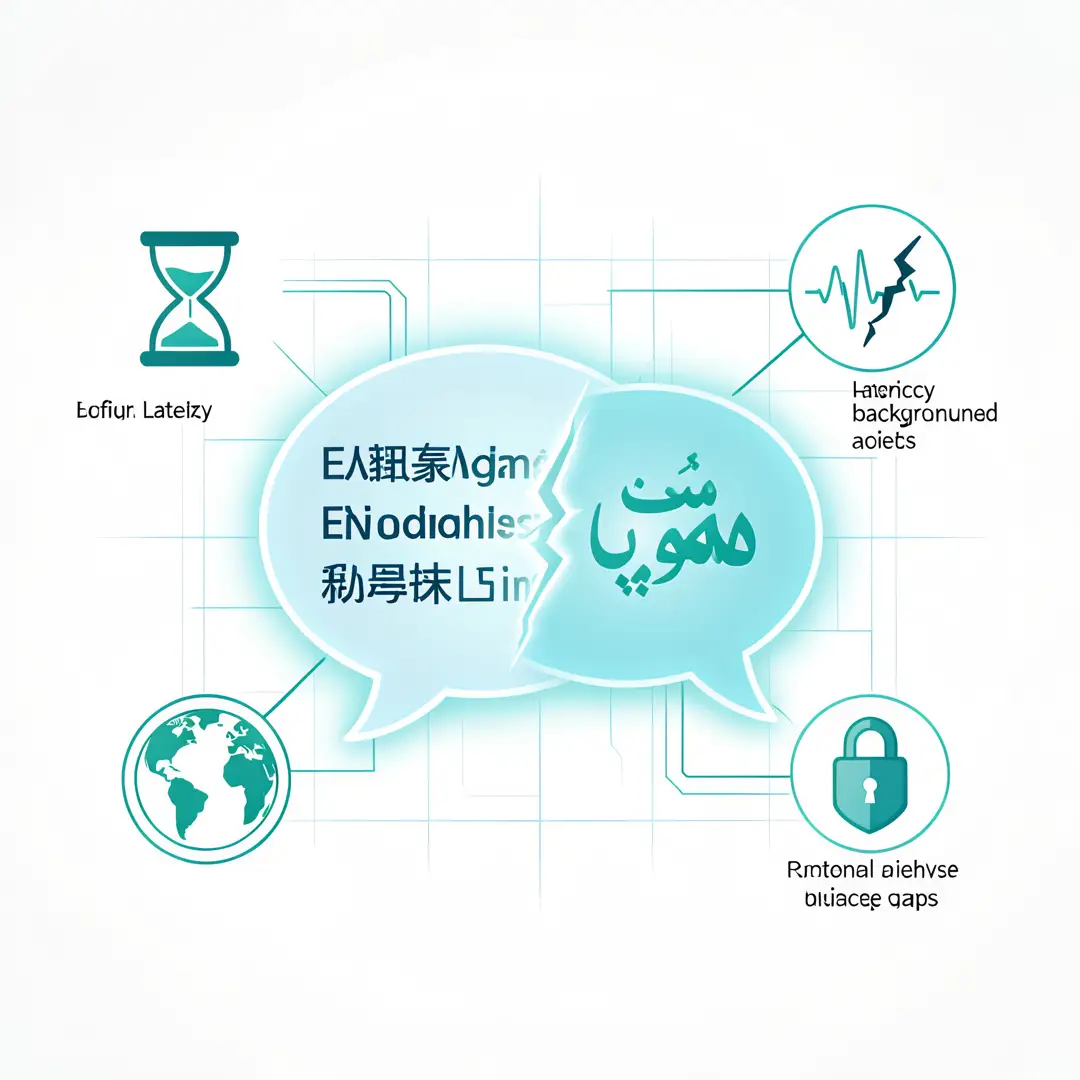
- Latency: The delay between speaking and hearing the translation. Real-time systems aim for under one second, but trade-offs exist between speed and accuracy.
- Context and Ambiguity: Words like “bank” or “bat” require context. Real-time systems often use surrounding words or speaker intent to disambiguate.
- Offline vs. Cloud: Some apps run entirely on-device for privacy and speed; others rely on cloud servers for larger models and better accuracy.
Another key concept is the difference between simultaneous and consecutive translation. Simultaneous translation attempts to interpret speech as it is spoken, similar to UN interpreters. Consecutive translation waits for the speaker to pause. Most real-time apps use a chunked approach that mimics simultaneity but with small delays.
Finally, evaluation metrics matter. BLEU scores for MT and word error rates (WER) for ASR are common, but human judgment remains the gold standard for fluency and adequacy.
Deep Dive
Let’s unpack the technology stack in more detail. The first challenge is robust speech recognition. Audio is captured by a microphone, converted to digital samples, and then processed in frames—typically 10 to 25 milliseconds long. Neural acoustic models, often based on recurrent neural networks (RNNs) or convolutional neural networks (CNNs), predict phonemes or characters. A language model then corrects likely errors. For real-time use, streaming ASR is essential: it outputs partial hypotheses as the speaker continues, rather than waiting for silence.
Once text is available, machine translation takes over. Early systems used statistical phrase-based methods, but today nearly all production systems use neural machine translation. A transformer model encodes the source sentence into a vector representation and decodes it into the target language. Attention mechanisms allow the model to focus on relevant words. For real-time translation, the MT model must handle incomplete sentences because ASR may not have finished. Techniques like incremental decoding and re-scoring help maintain quality.
Speech synthesis has also transformed. Instead of robotic concatenative synthesis, neural TTS models like Tacotron and WaveNet generate human-like prosody. They can even mimic the original speaker’s tone, though that raises ethical concerns. For real-time output, low-latency vocoders are critical—some run on-device, while others use cloud GPUs.
Putting it together is an engineering challenge. The pipeline must manage buffering, synchronization, and error propagation. If ASR mishears a word, MT may produce nonsense, and TTS will speak it confidently. To mitigate this, modern systems use end-to-end models that jointly optimize ASR and MT, or they apply confidence scores to flag uncertain segments.
Consider a live conversation between an English speaker and a Japanese speaker. The English audio is streamed to an ASR engine. The Japanese translation is generated incrementally. Meanwhile, the Japanese speaker’s reply goes through the reverse pipeline. The system must handle turn-taking, overlap, and latency. Commercial products like Google Translate’s conversation mode and Skype Translator solve this with careful buffering and visual cues.
Hardware also matters. Smartphones now include dedicated neural processing units (NPUs) that accelerate on-device inference. This reduces round-trip time and keeps data private. For high-accuracy cloud translation, 5G networks provide the necessary bandwidth and low latency.
Step 1: Understand the fundamentals
Before you choose or build a real-time translation solution, learn the basic pipeline: ASR → MT → TTS. Know the difference between streaming and batch processing. Streaming is essential for real-time; batch is fine for documents. Understand that accuracy depends on audio quality, language pair, and domain. For example, medical terminology requires specialized models. Read documentation from cloud providers like Google, Microsoft, and Amazon to see their latency and accuracy benchmarks.

Step 2: Assess your starting point
Evaluate your current needs. Do you need one-way translation (e.g., listening to a lecture) or two-way conversation? What languages? How many users? What is your budget? Test existing free tools first—Google Translate, Microsoft Translator, and DeepL offer real-time features. Measure their performance on your typical content. Note failures: do they struggle with accents, jargon, or fast speech? This baseline tells you whether you need a custom solution or can rely on off-the-shelf APIs.
Step 3: Set clear goals
Define success metrics. For a customer support chatbot, you might target 90% word accuracy and under 800 ms latency. For a conference interpretation system, fluency and speaker diarization may matter more. Write down specific, measurable objectives. Also decide on privacy requirements: on-device versus cloud. And consider scalability: will you support 10 users or 10,000? Clear goals prevent scope creep and guide technology choices.

Step 4: Gather necessary resources
You will need audio capture hardware (good microphones reduce noise), computing resources (GPUs for training, NPUs for inference), and software libraries. Open-source options include Kaldi for ASR, OpenNMT for MT, and Coqui TTS for synthesis. Cloud APIs are faster to deploy but cost more at scale. Also gather data: parallel corpora for your domain, and audio samples for fine-tuning. If you lack data, consider transfer learning from pre-trained models like Whisper or M2M-100.
Step 5: Apply the core methods
Start with a modular pipeline. Use a streaming ASR model to get partial transcripts. Feed those into an incremental MT model. Then synthesize speech with a low-latency TTS engine. For better results, fine-tune each component on your domain data. If latency is too high, try end-to-end models that combine ASR and MT into a single neural network—though these are harder to train. Implement confidence thresholds: if ASR confidence is low, ask the speaker to repeat. Use punctuation restoration to improve MT quality. For two-way conversation, add voice activity detection to manage turn-taking.

Step 6: Monitor your progress
Real-time translation is not a one-time setup. Continuously log latency, word error rate, and user feedback. A/B test different models. Watch for drift: as accents or topics change, accuracy may drop. Set up alerts for high latency or low confidence. Regularly update your models with new data. For user-facing apps, provide a feedback button so people can correct translations. This data helps you improve over time. Remember that reliable information and consistent habits lead to better long-term outcomes—so schedule monthly reviews of your system’s performance.

Best Practices
To get the most from real-time translation technology, follow these practical guidelines.
- Optimize audio input: Use noise-canceling microphones and close-talk positions. Background noise is the biggest enemy of ASR.
- Choose the right language pair: Some pairs (e.g., English-Spanish) work better than others (e.g., English-Japanese) due to training data availability.
- Leverage context: Provide glossaries or domain-specific terms to the MT system. Many APIs allow custom dictionaries.
- Handle latency gracefully: Show partial results to users so they know the system is working. Avoid long silences.
- Test with real users: Lab conditions differ from real life. Run pilot tests with representative speakers and accents.
- Prioritize privacy: For sensitive conversations, use on-device models or encrypted cloud services.
- Plan for failure: Always have a human interpreter backup for critical meetings. No system is 100% accurate.
- Stay updated: The field evolves quickly. New models like OpenAI’s Whisper and Meta’s SeamlessM4T push boundaries.
Also consider the ethical dimension. Real-time translation can misrepresent intent, especially with sarcasm or cultural nuance. Always disclose when a machine is translating. For legal or medical settings, use certified human translators.
FAQ
What should I know about The Technology Behind Real-Time Language Translation?
You should know that it is a multi-stage pipeline: speech recognition, machine translation, and speech synthesis. Each stage introduces latency and potential errors. Accuracy depends on audio quality, language pair, and domain. Real-time systems trade some accuracy for speed. They work best for clear speech, common languages, and non-critical conversations. For important matters, always have a human verify. Also, privacy varies: some apps process everything in the cloud, while others run on-device. Understanding these basics helps you set realistic expectations and choose the right tool.
Who is this guide for?
This guide is for anyone curious about how real-time translation works and how to use it effectively. That includes business professionals who collaborate across languages, developers building multilingual apps, travelers, students, and customer support teams. If you are evaluating translation tools or planning to integrate real-time translation into a product, the step-by-step section and best practices will be especially useful. No advanced technical background is required—just a willingness to learn the fundamentals and test what works for your situation.
Conclusion
The technology behind real-time language translation is a remarkable integration of speech recognition, neural machine translation, and speech synthesis. While it is not perfect, it has become fast and accurate enough for many everyday uses. By understanding the core concepts, following the step-by-step approach, and adhering to best.
You now have a solid foundation for The Technology Behind Real-Time Language Translation. Apply the best practices above and revisit this guide as your needs evolve.